
"Kent SLN9"
630 article(s) found
Introduction to the Origin of Coffee in Yunnan small Coffee Plantation
Yunnan's high-quality geographical and climatic conditions provide good conditions for the growth of small-grain coffee. The planting areas are Lincang, Baoshan, Simao, Xishuangbanna, Dehong and other prefectures. Dehong Hougu Coffee Co., Ltd. is better. Small-grain coffee in the Science and Technology Museum, No. 1 Cuihu West Road, Kunming, Yunnan Province, is suitable for growing in the mountains at an altitude of 800 to 1800 meters. If the elevation is too high, it will taste sour, and if it is too low, it will taste bitter.

Tanzania Klimangaro Coffee Bean Flavor Taste Introduction Klimangaro Origin
Tanzania Klimangaro AA Tanzania coffee beans production is quite a lot, Taiwan is common Kilimanjaro, mostly water washing treatment, characteristics close to Kenya beans, but the acid is weaker than Kenya, overall quality is not Kenya, but some of the country's manor coffee grows in the foothills, raw coffee beans a little blue-green, slightly sour, but with a thick sweet taste.

Introduction to the use of dripping pot of Yunnan small-grain coffee
The use of dripping pot of small-grain coffee in Yunnan is mainly distributed in Lincang, Baoshan, Simao, Xishuangbanna, Dehong, Nujiang and other prefectures. The average temperature of Lujiangba in Baoshan is 21.5℃, and the highest is 40.4 ℃, which is basically frost-free all the year round. It is recognized as the best producing area of small-grain coffee. The small grains of coffee cultivated here are strong but not bitter, fragrant but not strong, well-proportioned and mellow.

Tanzania coffee beans taste aroma variety introduction
Coffee taste: Tanzania is a typical East African country, bordering Kenya and Uganda in the north, Malawi, Mozambique and Zambia in the south, Rwanda and Burundi in the west. Many people like to compare Tanzanian coffee to their Kenyan neighbors. Compared with Kenya's good coffee beans, Tanzanian coffee has less bright acid and more gentle beauty.

Knowing the bitterness of bourbon coffee is not necessarily a bad bitterness
Professional coffee knowledge exchange more coffee bean information Please follow the coffee workshop (Wechat official account cafe_style) some people think that black coffee is bitter coffee, the bitterness of coffee has always been controversial. Some people say: how can it be called coffee if it is not bitter? Some people say: good coffee has a pleasant bitterness. Black coffee (black coffee) refers to unembellished coffee without added sugar and milk.

Introduction to the correct drinking method of Yunnan small-grain Coffee, Flavor description and treatment, Variety characteristics and taste
Coffee beans in Yunnan are mainly planted in Dehong Lincang and Pu'er Banna in Baoshan, western Yunnan. Robusta was the main coffee introduced by missionaries in the 19th century, but it was no longer planted on a large scale. In the 1950s, experts assisted by the Soviet Union brought two mainstream Arabica varieties: typica and Bourbon bourbon to Baoshan, Yunnan for cultivation and promotion.

Introduction to the production area of grinding scale of Yunnan Tieka coffee bean flavor description treatment method
In addition, although the environmental problems of coffee cultivation can meet the standards of hot areas, they are far away from the equator, evaporation, large-scale coffee cultivation in Yunnan is less than 1100m above sea level, the severe drought in Yunnan in recent years, and the frost period in the producing areas, and so on, all make the cultivation of coffee can not be guaranteed normally, directly affecting the quality of coffee production. As for other processing problems and the quality of farmers, let alone say so.

The variety and style of Typica Tibikati pickup truck
Tiebika (Typica Tibikati pickup) is the species name of coffee beans and is one of the oldest varieties of Arabica. Iron pickup, also known as the old variety of small-grain coffee, its yield is less, cultivation is difficult, so the price is much higher than ordinary small-grain coffee. Tibica coffee, native to Ethiopia and southeastern Sudan, is the most widely cultivated in the Western Hemisphere.

The origin of Yunnan small-grain coffee, the oldest native variety in Ethiopia.
Professional barista communication Please follow the coffee workshop (Wechat official account cafe_style). I am a coffee lover. I always say that beans in Yunnan are very ordinary, but today I was surprised that the boss's wife is also a coffee lover. In order to pass the time, she opened her own coffee shop. Today, I went out of my way to gather popularity. The landlady took out half a pound and claimed to be from Yunnan Dehong.

Tanzania coffee bean flavor taste manor area introduces the characteristics of Tanzanian coffee beans
The most interesting thing to talk about about Tanzanian coffee beans (hereinafter referred to as TZ) is Kilimanjaro AA, followed by PB. Come out of these, no matter how much introduction about TZ is really very few. When Pangu came out, in 1898, bourbon coffee was introduced by Catholic priests to the Kilimanjaro region of Tanzania. And then there's K.

Brief introduction of Reunion Island: what does bourbon coffee mean? which producing area of bourbon coffee is better?
More information on coffee beans Please follow the Coffee Workshop (official Wechat account cafe_style) due to the low yield and easy to interfere with diseases of the Tibica seed introduced to Brazil in 1727, the bourbon seed was introduced to Brazil around 1860 via Campinas in the south and rapidly expanded northward to other parts of South and Central America. In Latin America today, Bo

Introduction to Yunnan Fine Coffee varieties, Flavor, taste, Iron Card, Fine Coffee beans
Speaking of which, I think there should be some judgment on the varieties of coffee in Yunnan. What about the excellent iron pickup and bourbon before? In the new promotion and planting, there are still many hills left to continue to grow old varieties of coffee, but, generally speaking, backward places do not have the protection of origin and a single species, a mountain, 10 families, all kinds of people, a gust of wind blowing, pollen flying everywhere. Oh.

Outline and grading of coffee beans in Tanzania
The most interesting thing to talk about about Tanzanian coffee beans (hereinafter referred to as TZ) is Kilimanjaro AA, followed by PB. Apart from these, there are very few introductions about TZ.

Starbucks Yunnan coffee bean knowledge, Yunnan coffee introduction
Follow the caf é (Wechat official account vdailycom) found that the beautiful cafe opened a small shop of its own. Chinese coffee is concentrated in Yunnan and Hainan provinces. Yunnan has a large output, with an annual output of about 26000 tons in recent years, accounting for 90 per cent of the country's output. It is said that Yunnan coffee came from the French 70 or 80 years ago. The main variety is Arabica Arabica, the so-called small seed coffee.

Is the coffee sour or bad? Kenyan coffee tastes better with sour fruit.
Professional coffee knowledge exchange more coffee bean information please follow the coffee workshop (Wechat official account cafe_style) front street-Kenya Coffee introduced the Kenyan coffee industry started late, the 19th century, the Arabs first small-scale cultivation, but by Kenyan locals resistance, in the early 20th century, due to the intervention of British and French forces, began to grow coffee on a large scale. All varieties of coffee in Kenya have been changed.

Processing method of Katim Coffee Bean in Yunnan Province
Yunnan Katim Coffee Bean processing method after shelling, there are 18.5 kilograms of raw beans of different sizes, many broken beans, adzuki beans and bad beans, and there are still a lot of defective beans after drying. So we hand-picked the beans on the spot, and when finally picked out, there were still 9 kilograms of qualified ones left, and at this time, most of the morning had already passed, of course, if it was used for instant solution.
Description of Taste and Flavor of Yunnan Tieka Coffee beans introduction to the producing areas of Grinding scale varieties
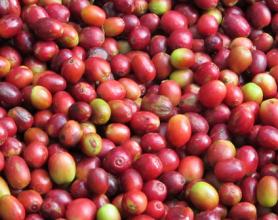
Yunnan Tieka coffee beans taste and flavor description grinding scale variety production area introduces the environmental problems of coffee cultivation, although it can reach the hot area standard, it is far away from the equator, the problem of evaporation, and the large-scale Yunnan coffee planting area is less than 1100m above sea level. in recent years, the severe drought in Yunnan, as well as the frost period in the producing areas, all make it impossible to guarantee the cultivation of coffee, which directly affects the production of coffee.
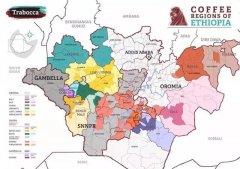
The origin of fine coffee beans in Africa, what kinds of coffee beans are in Africa, and the origin of coffee.
Speaking of coffee beans from Africa, you can immediately think of Kenyan coffee beans and Ethiopian coffee beans. Their beans have always been very popular among the people, because the rich sour fruits are really unforgettable. Africa, located in the equatorial zone, is a well-known region of coffee producers in the world, such as Ethiopia and Kenya. A

Grinding scale of coffee beans in Yunnan introduction of varieties in manor production area by taste treatment method
Small-grain coffee is suitable for growing in the mountains at an altitude of 800 to 1800 meters. If the altitude is too high, it will taste sour, and if it is too low, it will taste bitter. Small grains of coffee are mostly planted in dry and hot valleys about 1100 meters above sea level, so they are moderately sour, rich and mellow. There is a unique environment suitable for the growth of small seed coffee in many areas of Yunnan, and the quality of small seed coffee is excellent. The planting area is mainly distributed in the

Introduction to the varieties of Yunnan Coffee Bean produced by Grinding and Calibration method
Although Zhu Kula is poor and backward, it has an inextricable bond with coffee. In addition to growing coffee all over the country, the villagers all have a tradition of drinking coffee: self-growing, self-grinding and self-brewing, and now men, women and children in the village have the habit of drinking coffee. The villagers here have a special feeling for coffee trees, even if the coffee beans do not bring them any economic benefits.